Uncategorized

Best Advice Yet

IMG_9486

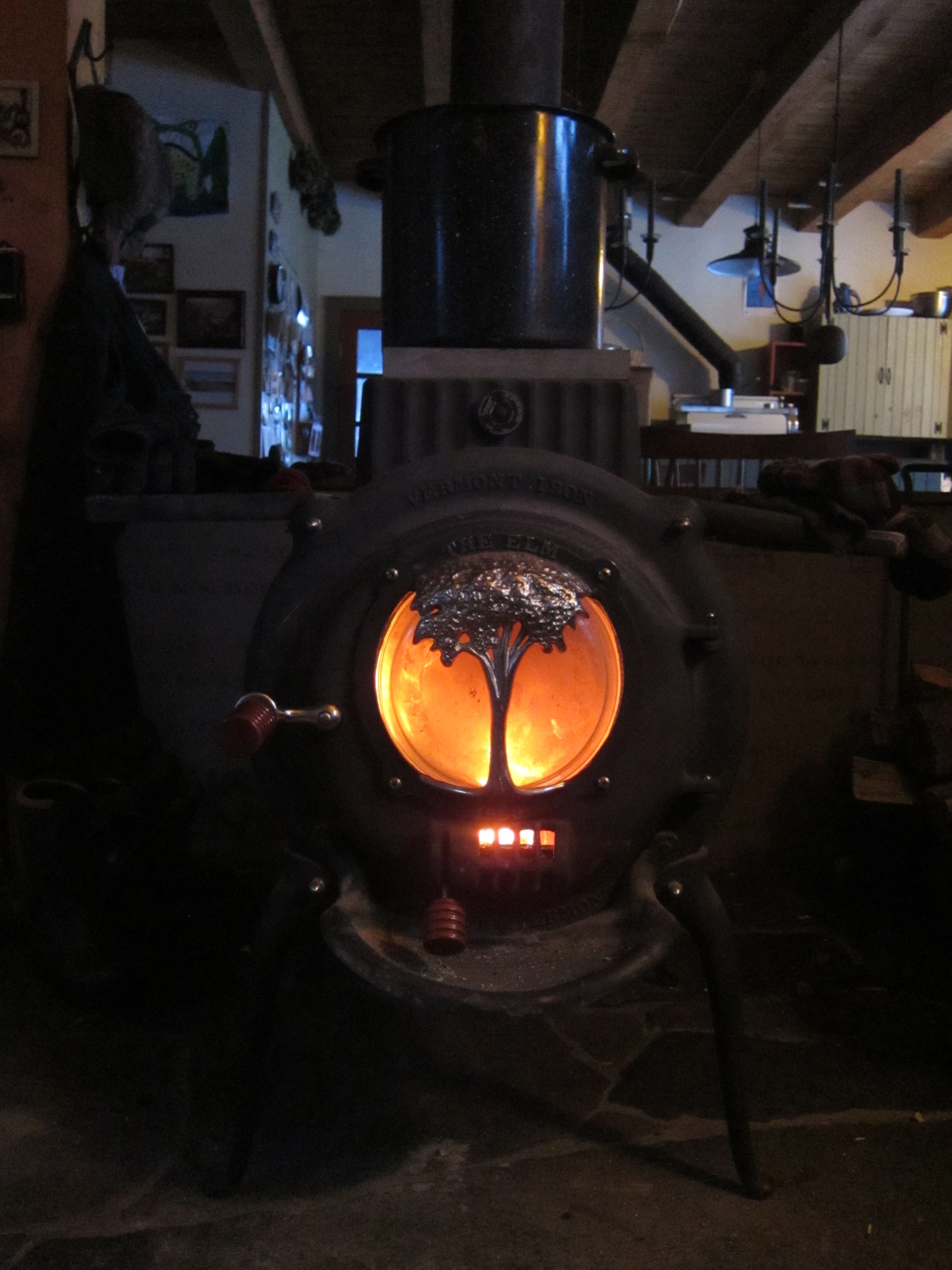
Every morning now, the first thing is fire. There are mornings we could go without, but I’m in the habit, and I like the habit. It’s dark when I get up and sometimes I just sit in the dark for a while, feet up on the part of the cookstove that doesn’t get too hot to have my feet up on it. Sitting in the dark’s ok, especially if you’ve got your calloused heel skin resting on piece of warm iron. Especially if you can hear your coffee bubbling on the stove top.

I think there’s too much artificial light in this world. I think it messes with us. I think that the privilege of starting a fire and sitting in the dark and then cooking your breakfast over that fire  – this morning, fried potatoes and onion, spinach and grated beets, a mess of eggs and bacon – is something worth fighting for. Or maybe “fighting for” isn’t quite right (and besides, I’m as weary of the battle mantra as anyone. Seems like all we do is fight things anymore). Maybe what I mean is that it’s worth bending your life however it needs to be bent in order to accommodate it. Yeah, that’s it: Bend your life however it needs to be bent so that you might have the privilege of starting a fire and sitting in the dark with your calloused heel skin on the part of the stove that doesn’t get too hot to have your calloused heel skin on it.

Damn. Two paragraphs in and already I’ve dispensed the best advice yet to be dispensed on this blog.

I think I’ll quit while I’m ahead.


Uncategorized

I’ll Stop Wondering

I was cleaning out my office this morning, and found the December 2001 issue of Powder magazine, for which I wrote the following story. I always sort of liked this piece. I sure liked skiing with these guys. It’s hard not to wonder how I’d write this story now if I had the chance to write it again. Which I don’t. So I’ll stop wondering. 

At 11:45 a.m. on a sunny Saturday in early February, at the peak of a remote and nameless Vermont mountain, Tony Berby pops the tab on a can of Natural Light beer. Tony is a big man, perhaps 6 feet tall, and carries a chest made thick by a lifetime of labor. He is also quite thirsty. The callused hand – almost a paw, really – that engulfs the can makes two lingering trips to his lips, and the beer is gone. Tony glance curiously at the empty tin cylinder, shrugs his prodigious shoulders, crushes it flat, and returns it to his pack where it nestles among its remaining five, still-full companions like a wounded animal seeking solace.

This is not a story about drinking beer, though as you’ll see, drinking beer certainly plays a part. Nor is this a story about smoking cigarettes – Marlboro Lights, specifically – but once again, they are a factor, and cannot be ignored. In fact, there are many things that this story is not about – heavy metal music; frozen, crinkle-cut French fries and blood-raw steak; a granite-producing town fallen on hard times – that are crucial to what makes Tony and his friends the most hard-core ski bums east of the Mississippi. So please, allow me to backtrack a few hours, from the fizzy chill of Tony’s mid-morning, head-ringing refreshment, to the cocoon-ish warm of a small greasy spoon on the main drag of a small, snow-washed town.

Fay dances with the coffeepot as if it were a lover, cradling it tight as she dips and twirls around the outstretched limbs, and then – zing! – her arm straightens, the pot tips, and our cups are full once again. Her movements are deft, not unlike an accomplished skier flitting through a thick copse of trees, and it’s clear in the way she works that pot: Here is a women who, given a different upbringing, could slip through mountain trees like a whisper.

Fay leaps gallanting into a drinking discussion as she pours. “I don’t drink too often, myself. Last time I did, I was on the floor for a week.”

Pete, mid-bite, without pause or reflection, indeed, seemingly without thought, bags the punch line: “Betchyer husband liked that!”

Perhaps due to his uncanny ability to escape unscathed from potentially perilous situations like this one, Pete is the unspoken ringleader of all things risky and foolish. Whether talking trash to a waitress, nailing the first run of an unexplored backcountry chute, arcing 2 a.m. powder turns through trees by only the light of his headlamp, or defying every Surgeon General’s warning ever issues, Pete stands just slightly to the left of harm’s way. He pulls you in with the sheer breadth and charm of his enthusiasm, the gleam of his blue eyes, and the constant, barely contained thrum of energy that courses through him like a gasoline fire. And it’s contagious. Pete’s vitality rushes off him in waves, until you feel the same warm surge of invincibility that seems to drive his every waking moment.

Stop. For now I must take you forward in time, not – as you might expect – to a ski slope, but to the meat aisle of the Grand Union supermarket. It is somewhere between late evening and full-blown night, and we are ravenous. It’s been a long, hard day skiing the trees of Mad River Glen, punctuated by an ambulance ride for our friend Tom, and although Tony and Pete paw wolfishly through the stacks of bloody steaks, squeezing and poking, sniffing and discarding, there is a certain detached weariness to their actions. Tom’s shit-luck accident, caused by a stump lurking under fresh powder, is a grim reminder that nobody wanted. And while Tom’s injury will prove less serious than we originally thought, the echo left by his howl of pain and the strobe of the ambulance light still bounce ‘round our brains.

Thick, USDA prime cuts in hand, we pause at the frozen foods where Pete digs deep to find crinkle-cut fries. From these ingredients, plus six-packs of both Guinness and Molson Export (“I like this stuff, but I’d rather have the good ol’ 3.2 percent when I’m skiing,” explains Tony), we will fashion a late feast. We will eat long and hard, filling our bellies with beef and potato and beer, eating and drinking to forget our own vulnerability, and to fuel ourselves for the weekend that lies ahead, stretching before us in all its sun-warmed, snow-blanketed glory.

Saturday’s destination, known only as “The Hill,” is just south of Pete’s hometown of Barre, Vermont (by this, I mean the town where Pete was born some 36 years ago, raised, and now lives and works). Barre was built on granite, both literally and figuratively. It is home to what is widely regarded as the highest quality memorial-grade granite in the world, and as his brother does, as his father did, Pete carves a living out of stone. He’s in sales now, which holds certain benefits over the actual mining and cutting of rock. It’s not life-threatening, for one. For another – and surely more important to Pete – he gets laid off for two months each winter. As he puts it, he’s “on the Governor’s ski team,” which means he collects a subsistence-level unemployment check, and skis day in and night out, almost always in the company of Tony. Often, they are joined by Bob, a thickset Belgian telemarker who services the massive, 10-foot saw blades that slice multi-ton slaps of granite into more manageable sizes.

Today will be the 40th-something time this season Pete has donned climbing skins for the 90-minute trek to The Hill’s gladed peak, where he and his skiing partners have thinned the forest to create over two dozen trails of varying width, pitch, and length. The longest, Sanctuary, drops nearly 1,000 feet through a hardwood forest. It’s a five-minute rip down, and a 30-minute slog back up. On a good day, the boys will hit Sanctuary four or five times, and bag maybe a half-dozen runs on North Slope before stopping to grill T-bones or boil hot dogs. If the snow is fresh, and time a more precious commodity than warm food, Pete snacks on 25-cent packages of crackers and processed cheese product, while Tony slurps cold creamed potato and ham soup straight from the can, washing down each gelatinous bite with a glug of Natural Light.

Up here, atop this mountain, in the absence of chairlifts and the people who ride them, the boys are at home. There is no safety net, no place to get warm, and perhaps more importantly, no one to judge their Vermont accents thick as spring mud, skis salvaged from rental shop dumpsters, and Tony’s tattered, beloved Marlboro Gear backpack. On this desolate and frigid mound of granite, earth, and snow, these men have carved a place for themselves where they can revel in the freedom afforded by a set of skis in powder, and the comfort of their own culture.

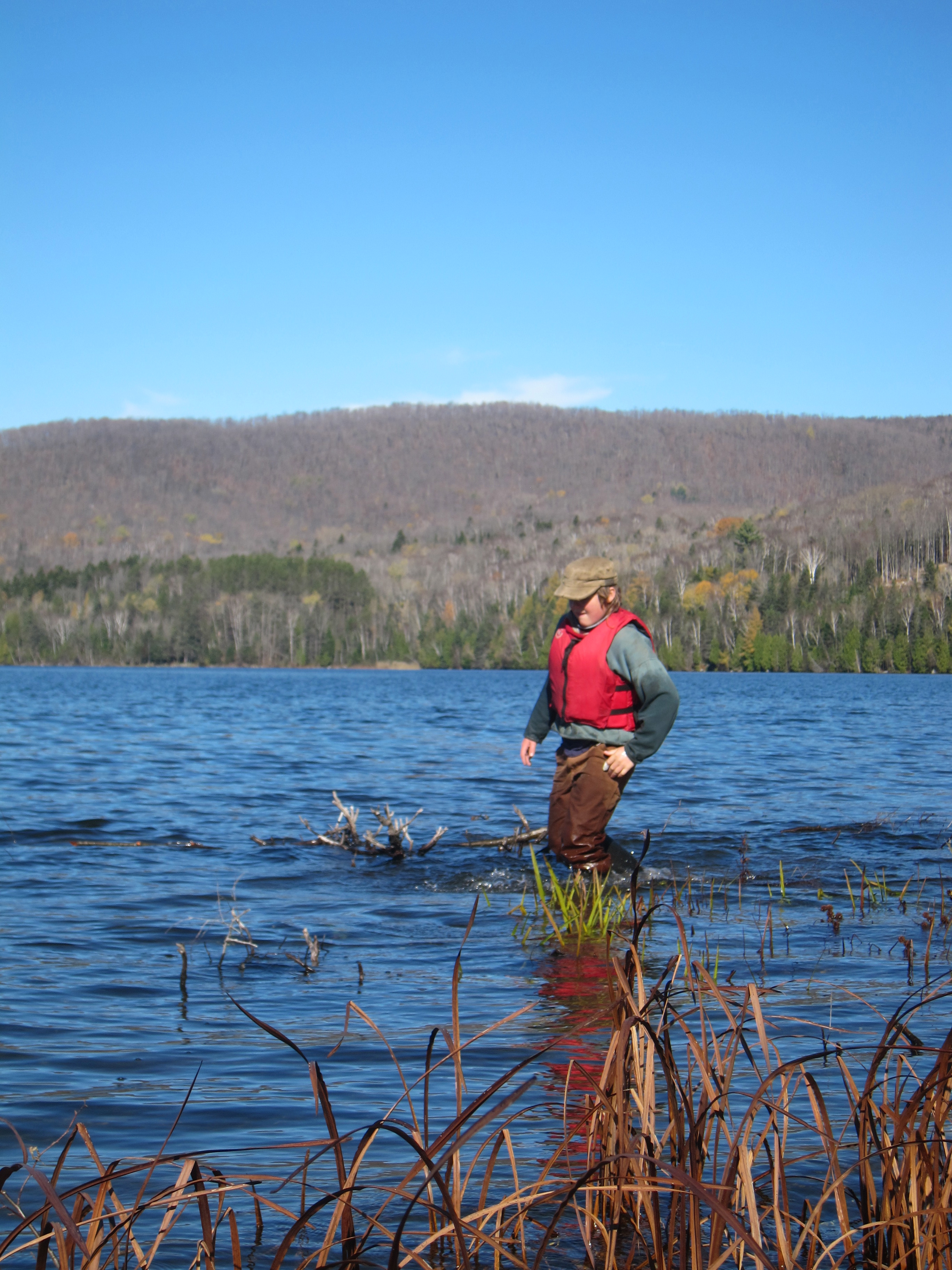
By the time we reach the end of the dead-end road that accesses The Hill, Pete has lapsed into a rare moment of silence, and Bob’s big, red Ford truck is parked tight against a high snowbank. Maybe Pete’s quiet because he knows that Tony and Bob are already halfway up the hill, a good 45-minutes closer to fresh tracks than we are. Or maybe it’s because his lay-off is almost over; in a few days, he goes back to work, and his skiing will be limited to nights, weekends, and the odd afternoon he manages to slip out the back window at work. Or perhaps he’s remembering his father, Harold “Cannonball” Richardson, who died four years ago. Cannonball was a hell of a skier; all week he worked the stone, and on the weekends drove to Tuckerman Ravine where he laced is low, leather boots and dropped into the bowl with the same certainty of success he passed on to his son. Two summers ago, Pete has his friends hiked Tuckerman and scattered Cannonball’s ashes from the headwall, where they caught on the breeze and hung in the air, much like the pungent smoke that drifts back to me from a figure that fades into the trees as he begins to climb.
Uncategorized

Whump and Clatter

IMG_9067

IMG_9063

IMG_9092

IMG_9051
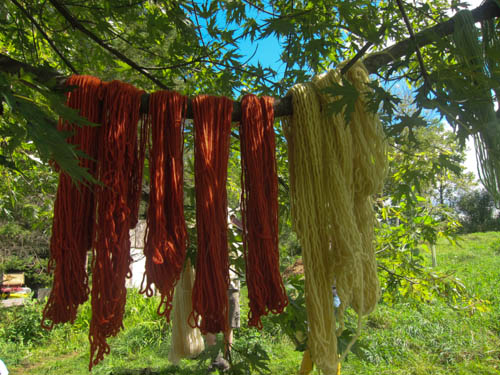
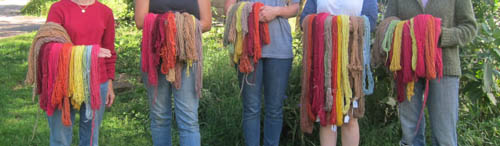
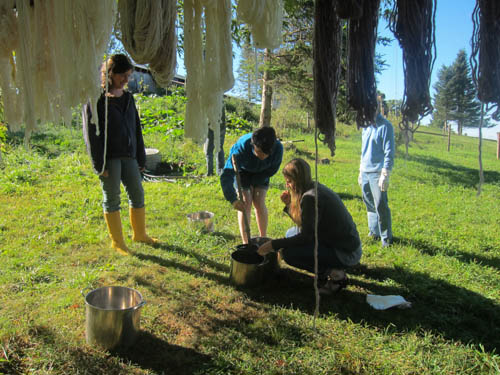
Photos from the natural fiber dyeing workshop our friend Prin gave this past weekend

I spent yesterday afternoon riding the wagon behind Martha’s baler, hauling bale after bale off the metal chute and stacking them behind me like child’s blocks. There were 679 bales in total and I couldn’t help but do the math: 679 x 40-pounds = 14 tons of hay. (Actually, it doesn’t: It actually equals only 27,160-pounds of hay, but I didn’t have a calculator in the hay field and I was too labor-addled to do the hard math in my head, so I rounded the 679 to 700). Fourteen tons of hay lifted, carried, and stacked. I looked down at my arms and discreetly flexed a bicep. It was less impressive than I’d hoped.

I have not been riding the wagon much the past couple haying seasons. Steven has pretty much taken over that job, leaving me to ferry wagons back and forth to the barn, where Penny, Roman, and the boys unload. I don’t mind ferrying wagons; I like driving tractors and ferrying wagons is all about driving tractors, and in particular the old iron that Martha favors and which is impeccably maintained by her friend Don, a Vietnam vet whose tattoo count rivals the word count of the longest sentence I’ve yet to hear him speak. It occurs to me that I could learn a thing or two from a guy like that.

I’d missed being in the field, the metronomic whump and clatter of the baler, Martha on the Deere, cupping her cigarette from the breeze, the fatigue slowly rising in my body and the boys, having abandoned their post in the barn, racing their bikes down the hills of the fresh-shorn hayfield. I can hear their shrieking over the machinery and I think how can I want anything more than this? I can’t. I don’t. 28,000-pounds of hay in three-and-a-half hours. Shrieking boys. Cigarette smoke and diesel exhaust. The whump and clatter and the remembering of all the little tricks of balance and timing.

You know what? I didn’t drop a single bale.


Uncategorized

Two Very Different Things

IMG_9032

Our layers are in a bit of a slump right now – a few molting, a few getting long in the beak (that’s a joke, right? because the saying is actually “long in the tooth” but chickens don’t have teeth, so I wrote “long in the…” Oh, never mind, you got it), and the new pullets are not yet earning their keep. We’re getting four, maybe five eggs a day, which would be fine if we weren’t an eight egg-per-day family. And that’s if we’re on strict rations, as we are now. Unrestrained, we’re probably in the double-digit-per-day range.

This is all merely a long way of saying that last night I found myself driving to a friend’s place to pick up a couple dozen supplemental eggs. It was a nice evening, a little muggy and warm perhaps, but you don’t go complaining about muggy and warm in September because you know that pretty soon there won’t been any muggy and warm to complain about for, oh, eight months. At least.

So on the way home I was listening to the Ted Radio Hour, window open to the deliciously muggy and warm air, and lo and behold what should the topic be? Why, learning, that’s what. And even more to the point, how kids learn. My ears perked up some, let me tell you.

I was particularly intrigued because earlier in the day I’d been a guest on a radio show and one of the listeners had called in to suggest that I’m not actually qualified to teach my children. Because, you know, I’m not a licensed teacher and furthermore, I didn’t even finish high school, which I guess most people think is a pre-requisite to knowing something about teaching. I’ve even had people tell me that since I didn’t finish high school (not to mention college ) I’m not educated, which always irritates me a bit. As if there were no other ways to become educated.

Anyway and all, I didn’t have a particularly snappy response to the caller, though I sure tried to summon one forth. I think I said something about disagreeing with her, that in my experience kids don’t need someone to teach them, that they’re perfectly capable of learning in the absence of formal instruction. Truthfully, it was a fine answer. I didn’t stumble over it and it was honest. But I doubt it changed her mind even a little bit, though in my experience, you don’t change someone’s mind during a call-in radio program no matter how convincing you are.

Anyway and all again, the first segment of the TED radio hour featured a fellow named Sugata Mitra. I’m gonna try and keep this short, but basically what Sugata did was install computers in public places in small Indian villages. And then what he did is precisely nothing. He explained nothing, he demonstrated nothing, he taught nothing. And what he observed is that when left to their own devices, children could teach themselves the most amazing things. Like advanced molecular biology. Like foreign languages. Like advanced molecular biology in foreign languages.

To any of you interested in childhood learning, whether you believe that self-directed unschoo… er, immersion learning works or not, I highly recommend listening to the segment. Sugata seems like a delightful fellow and his observations are fascinating and I have no doubt they would extend to adults, if only we could muster the innate confidence and love of learning that resides within our children.

Sadly, I think, many of us have lost confidence in our own ability to learn without formal instruction, and I believe it is from this place of uncertainty that we question our own qualifications to guide our children’s learning. Which, as Sugata so eloquently points out, is actually less about guiding than simply getting out of the way. It’s not about making learning happen, it’s about making room for learning to happen.They sound a lot alike, don’t they? But the truth is, they’re two very different things.

Uncategorized

For a Little While

IMG_9037
Drying blueberries

Katie Flagg of Seven Days did a nice piece on immersion learning, er, unschooling (thanks, Amy!). 

Tuesday evening we finished unloading bales in Martha and Lynn’s barn at six or so. There were 550 give or take a dozen, but you know what they say about many hands and all. Besides, the bales were light and soft and almost fluffy. Second cut is the Charmin of hay.

Steven rode the wagon behind the baler, stacking in that methodical way he has, never seeming hurried but with an efficiency that trumps speed any day of the week. That efficiency reveals the worker he is: Steven is employed at a sawmill full-time, cuts firewood, plows driveways, and hires out for 101 other rural tasks involving trucks and toothed cutting implements. He works seven days each week. He has a wife and a young son and is saving to buy a new car for his wife in cash. Once, when he and I were baling together, me on the tractor and him on the wagon, load after load after load of hay and none of this fluffy Charmin-esque second cut, but that stem-y first cutting that leaves cross-hatched scratches on the undersides of your forearms, I asked him if he wanted to trade places. He could drive the tractor and I’d stack on the wagon. It was hot. He had to be tired. Shit, I was tired, and all I was doing was steering the Deere down the long rows of loose hay. Steven just shook his head. “Ben, I’m a worker bee,” he told me. “I just like to work.”

I like to work, too, though I’m more of a flailer than Steven. I’m not so good at meting out my efforts, and I tend to work real hard and real fast ‘til I fall over the knife’s edge of exhaustion, at which point I’m pretty useless until someone hands me a sufficient quantity of calories. I guess you could say I’m sort of a binge laborer.

Wednesday morning I went and picked up a load of shavings from our friend Jim, who has a woodworking business in a nearby town with no farms and therefore has a tough time finding folks to take his shavings. The first time he called me to see if I wanted shavings and furthermore for free, I sort of thought it was a joke because ‘round here, a pile of kiln dried hardwood shavings would last about as long as a pie in a pigpen.

But damn if he wasn’t serious as the north wind in January, and so for the past year or so, I’ve driven over every time he’s got a full hopper and filled the back of our old Ford with the finest animal bedding that, in this case at least, money can’t buy. It’s messy, dusty, eye-stinging business, not fun at all, really, except for the satisfaction of a full truck and knowing how good the composted bedding will be. We’ve got a big pile of it up on the hill right now, last year’s dense pack scooped out of the loafing shed, and I swear it’s nearer to being finished than the hay-based pack of the year prior.

The work has been good. The haying, the shavings, the daily routine of chores, now reaching their late summer peak. It pulled me out of my head some, where I’d been hanging out a bit too much in the aftermath of so many questions and conversations relating the Outside story. I mean, those things are good, too, but after a time, I began to recall yet another passage from Carruth’s poem Marshall Washer:

Unconsciously, I had taken friendship’s measure

from artists elsewhere who had been close to me,

people living for the minutest public dissection

of emotion and belief. But more warmth was,

and is, in Marshall’s quiet “hello” than in all

those others and their wordiest protestations,

more warmth and far less vanity

And with that, I think I’ll shut up. For a little while, at least.


Uncategorized

Every Useful thing

IMG_8703

IMG_8715

IMG_8722

IMG_8725


No doubt

Marshall’s sorrow is the same as human

sorrow generally, but there is this

difference. To live in a doomed city, a doomed

nation, a doomed world is desolating, and we all

are desolate. But to live on a doomed farm

is worse. It must be worse. There the exact

point of connection, gate of conversion, is –

mind and life. The hilltop farms are going.

Bottomland farms, mechanized, are all that survive.

As more and more developers take over

northern Vermont, values of land increase,

taxes increase, farming is an obsolete vocation –

while half the world goes hungry. Marshall walks

his fields and woods, knowing every useful thing

about them, and knowing his knowledge is useless.


from Hayden Carruth’s poem Marshall Washer. It’s a good one. You can read the rest of it in this book

Uncategorized

Only the Beginning

Lazy
Lazy

We killed two beef this morning. I just returned from burying the cast-off bits of in the compost pile and I smell of that particular wet gut smell of just-slaughtered bovine. Did you know that every just-slaughtered animal has its own smell? It’s true. I’ve noticed that pigs and beef smell a little sweet, though a different sort of sweet from one another. I think I like the beef-sweet smell better.

I can confirm that we did not “harvest” these animals; we killed them. I know because I saw them both go down; it was my finger on the trigger that released the hammer that ignited the powder that drove the .410 slug into the brain of the second animal we killed this morning. It is popular these days to talk about harvesting animals, and I can sort of understand why, but from the perspective of someone who just looked a trusting animal in the eye and dropped her to the ground with no more physical effort than it takes to pick his nose, I’m not buying it. She probably thought I was coming in to scratch her on the back of the knob where her horns would’ve grown if she’d grown horns, which is understandable, since I’ve done that at least once a day for the past two years. I liked that girl. Sometimes I stood with her for a few minutes, just scratching and looking out across our land and feeling like maybe I know my place in the world.

What I’m saying is, you harvest a potato. You kill an animal.

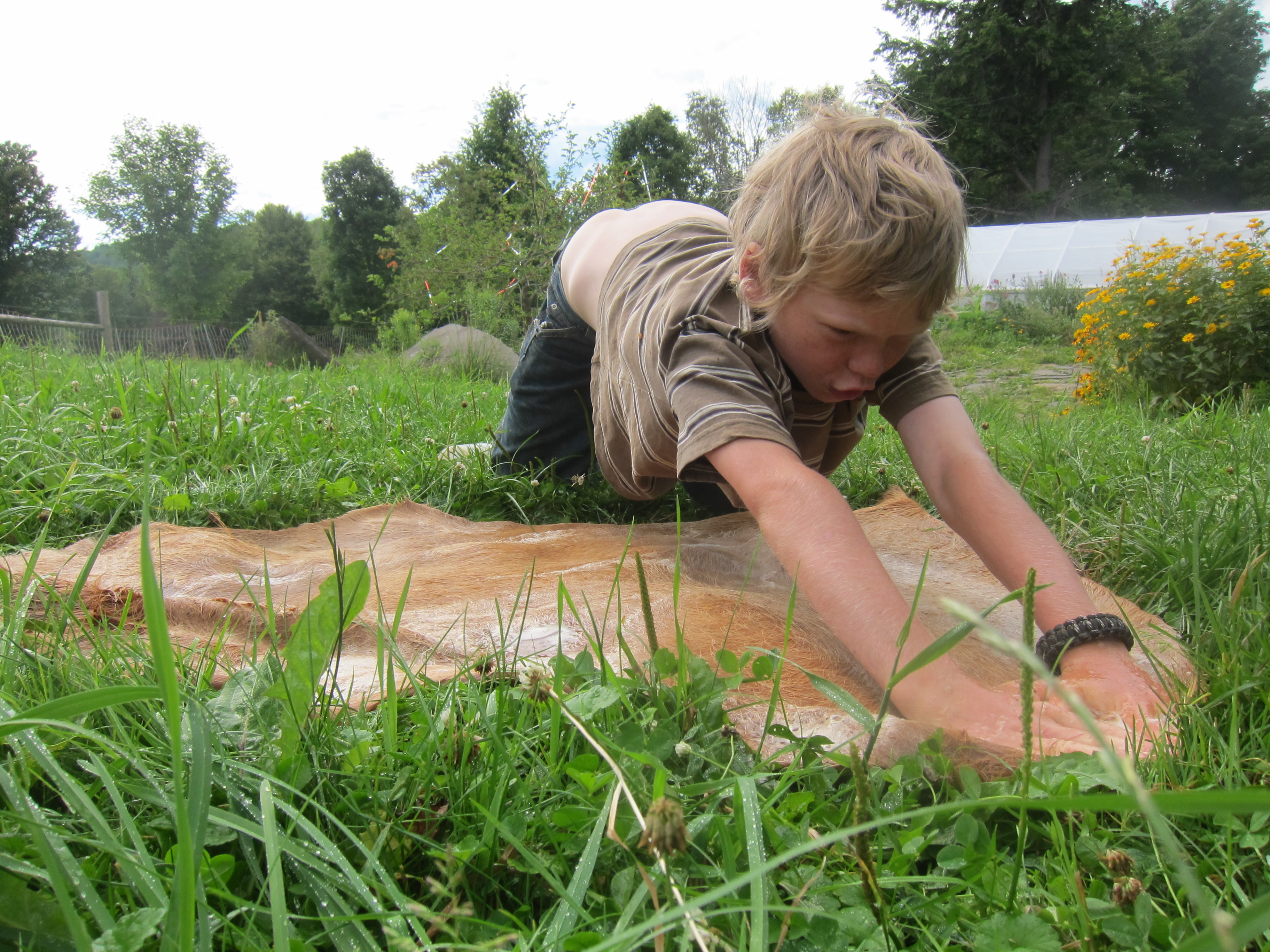
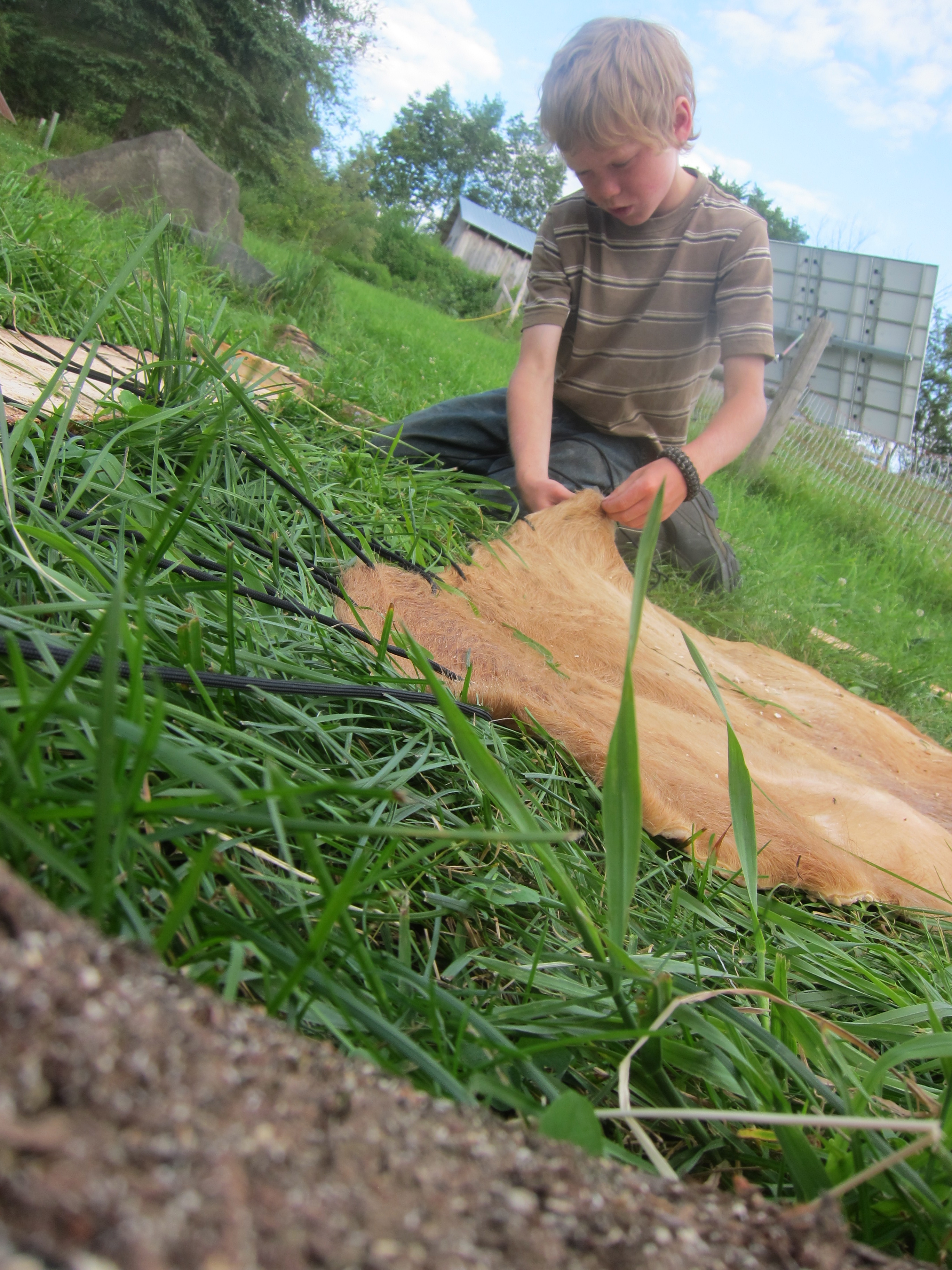
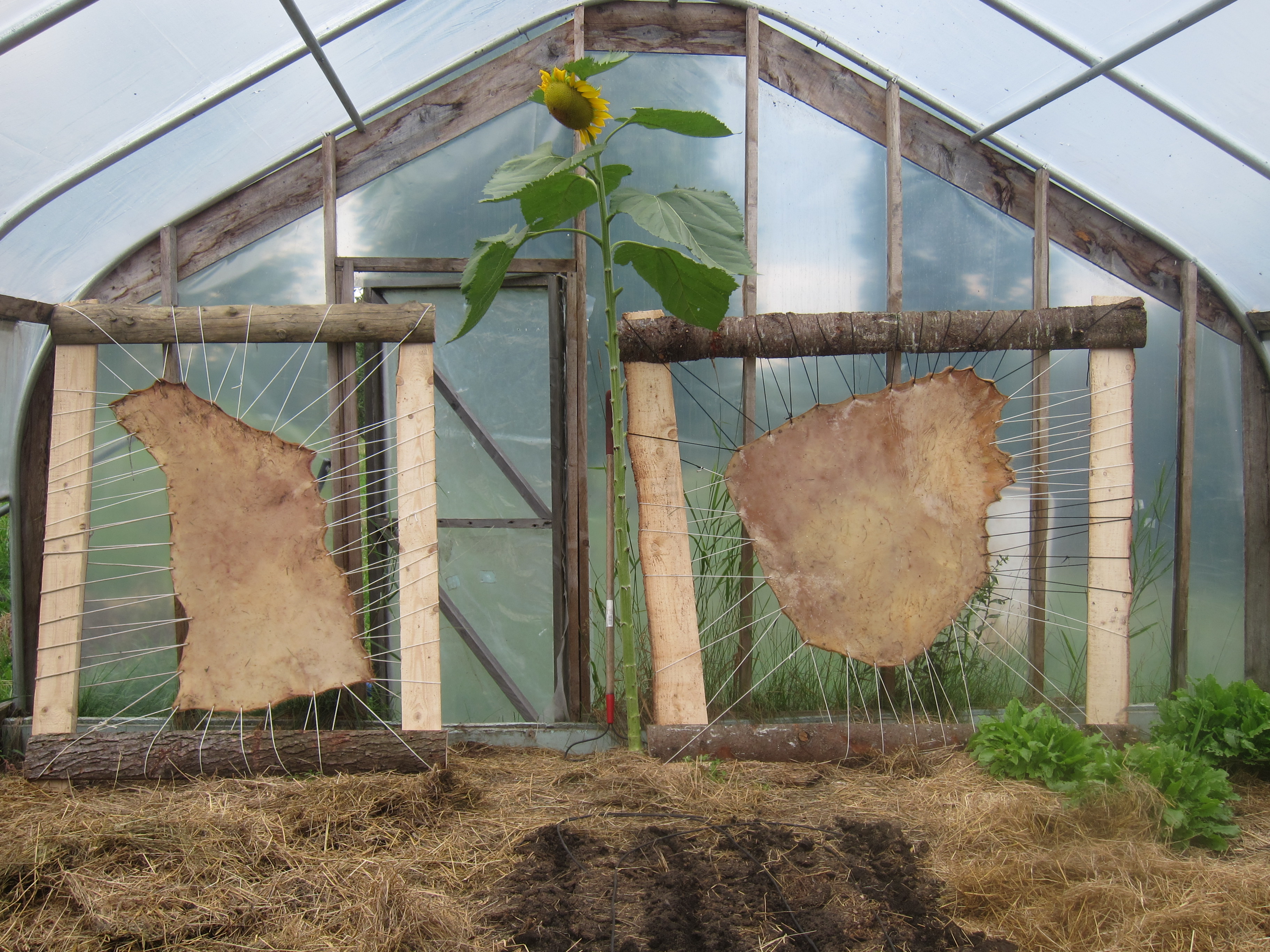
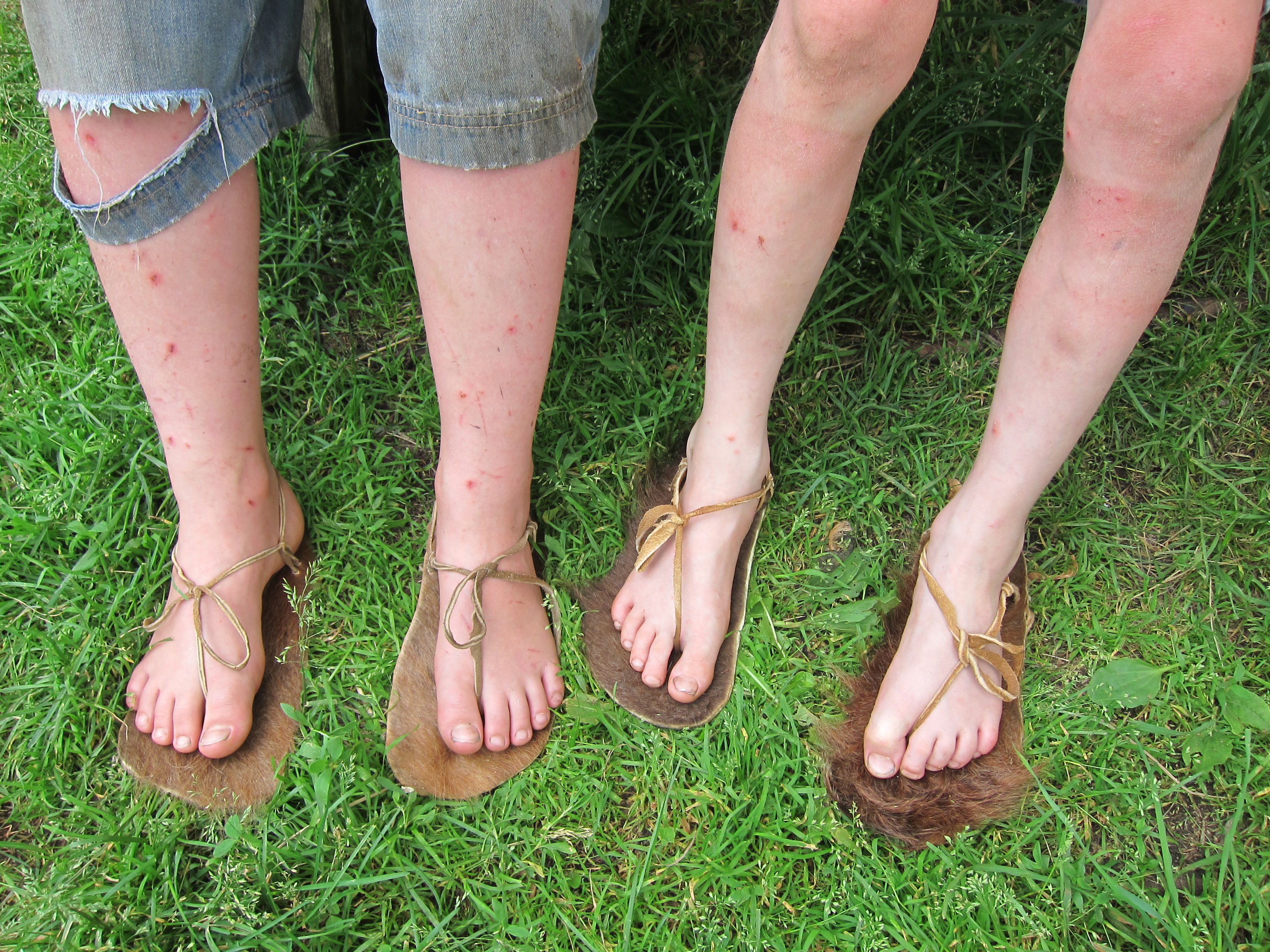
Down below the house, Penny and Rye are fleshing the silky hide from the cow I shot. She’s a Highland /Jersey cross and there is talk of huaraches and who knows what else. The heads, having been cleaved in half to extract the brains for tanning, went into buckets with holes drilled in them to allow in the ingress and egress of flies, which will lay millions of eggs on the rotting flesh. Our chickens will eat the resulting maggots. We will eat the chickens. If it’s true that you are not merely what you eat, but what you eat eats, then we will eat maggots. I find that perversely pleasing, sort of like when I was driving over to our friend Lucian’s a week or so ago with a couple of pig heads in a bag so he could make head cheese. I kept thinking of the opening scene in the movie Repo Man, where the old dude gets pulled over and the cop wants to look in the trunk. “Oh, you don’t want to look in there,” he tells the cop, which of course only makes the cop want to look all the more. I imagined getting pulled over and the cop asking me what was in the bag. I actually passed a cop just before I got to Lucian’s house. I tried to look like the sort of guy who might be driving around with something suspicious in the back of his Subaru, but he didn’t even look my way.

I believe this is the way it should work. Things should become other things and in the process they should not decrease, but increase. The cow I shot was a nurse cow to her calf and Apple’s. She provided milk to feed our pigs. She gave us shit to grow our beans. Her meat will give us the fuel to chop our wood and bake our bread and argue and love one another. Her hide will protect my children’s feet. The maggots that grow on the hollowed-out remnants of her head will make eggs and chickens we will cut up and fry in the lard that came from the pigs we raised on her milk. The calves she nursed will be next season’s beef and the whole damn thing will happen all over again. The trust. The trigger. The wet-gut, beef-sweet smell. The maggots. The lard. The chickens. The calves. The compost.

What I’m saying is, you kill an animal. But that is only the beginning.

Uncategorized

Oh, Dang: A Story

IMG_8433

I needed a part for the tractor. One of the many small linkage pieces that comprise the three-point hitch, which is the mechanism at the rear of the machine that allows for the operation of numerous implements, had come loose and tumbled unnoticed into the forest duff. I’d searched for longer than was strictly rational; after all, it was a $20 part at best and the spot I’d been working was down on the furthest corner of our land, accessed via nearly a half-mile of tractor road. I walked the half-mile down and back again and down once more, before abandoning my quest and striking out in search of chanterelles, which I knew were popping because the day before the boys had come home with their pockets full. We fried them in fresh butter and ate them with even fresher eggs. Damn.

Not long ago, if I needed a tractor part, I went to Rowell Brothers, the tractor and farm equipment repair business on the outskirts of Hardwick. I always liked going to Rowell Brothers; it was cluttered and confusing and generally unkempt, and smelled of grease and rubber and cleaning solvents. The man behind the counter was named Morris Rowell and I’m not sure how old he was, but certainly older than 70. Maybe older than 80. If Morris didn’t have the part I needed, he’d write it down on a scrap of paper and promise to order it and when I’d call a week later to see if it’d come in, he’d say “oh, dang, I forgot” and then he’d order it. After a while, I learned not to wait a week before my first call. That speeded up the whole process considerably.

There was a two bay garage attached to the parts room and anyone could walk freely into the garage to ask a question of Chris or Fred, the mechanics. There was no “employees only” sign; I doubt Morris gave much thought to liability, though he probably should have, given the profusion of things heavy, jagged, and precarious. These things were invariably as old as me or older; Chris and Fred did not think much of newer machines, though to be fair, the owners of newer machines probably didn’t think much of the minor chaos that prevailed in the garage at Rowell’s.

Rowell Brothers closed last year. Morris spent some time trying to find a buyer but no one stepped forward. It was one of the few times I wished to be wealthy, because I would have loved to buy the place. I wouldn’t have actually wanted to run it, but since I was wealthy, I could’ve just hired someone. Hell, maybe Morris would’ve stayed on for the right deal. Maybe then when I needed a part I could still stop by Rowell’s and Morris would either extract the part from where it was buried under a pile of entirely unrelated parts where no one but Morris could find it, or write it down and then forget to order it and in a few days I’d call to see if it’d come in. “Oh, dang,” he’d say, and then I’d know my part was really on its way.

As it was, I got my part at Tractor Supply, which is sort of like the WalMart of farm and garden supply stores. I’m not sure how many Tractor Supply stores there are across the country, but I think quite a few. I know of three within a one-hour radius of our place, though I’d never really needed to visit one before. Indeed, this was my first visit to a Tractor Supply. I found the part I needed quickly, with no assistance from any of the clerks. It gleamed in a well-lit bin and was cheaper than I’d thought it might be, and I briefly considered buying two, so I’d have a replacement if I lost another. But then I had the irrational notion that maybe I’ll find the original after all and thus have no need for a back up (this has not yet transpired). I checked out and emerged back into the sunlit afternoon. During the entire transaction, I’d spoken only three words: “Cash” and “Thank you.” I suppose I could’ve talked more but to be honest, I just wanted to get out of there. It was making me sad. And it smelled funny. No bad. Just… funny.

People often ask me about what’s happened in Hardwick since my first book was published, if the local food movement (or whatever you want to call it) is still gaining momentum. And I have to say that to be honest, I sort of stopped paying attention a while ago. I mean, I know that new food-based businesses have popped up over the past few years and I’ve heard they’re thriving and I’m glad for them.

You’d think that with all the food and ag-related activity in the area, Rowell Brothers could have thrived. And maybe its demise – or at least a piece of it – was by its own hand. After all, I know I wasn’t the only one who had to call Morris to remind him to order the parts he’d promised. Jimmy and I joked about it more than once.

But I also wonder if there was an inherent mismatch between Rowell’s and the shiny new 21st century local food movement, with all its entrepreneurial ambition. That sort of ambition can’t afford to wait for Morris to remember to order parts. That sort of ambition can’t really afford to run the aging, breakdown-prone machinery that needs those parts in the first place. It doesn’t need the encyclopedia of arcane knowledge contained in the heads of Morris and his mechanics. Because for everything Morris forgot, he knew 100 things more.

I don’t know. Maybe I’m reading too much into it. Maybe Rowell Brother’s was just another business whose time had come and gone, like so many before it. The world will keep spinning. The parts we need to keep our tractor and implements running will keep being made and I’ll still be able to find them in those well-lit bins at Tractor Supply or at the dealer, where I’ll pay twice as much for the same damn thing. That was the other thing about Rowell’s: The prices were real good.

The funny thing is, I actually drove by Rowell’s on my way to Tractor Supply. Someone’s making chairs there, now. They look pretty nice.


Uncategorized

One of These Days

IMG_7512

I bought the old ice box pictured above from an antiques dealer who was going out of business. I think I paid $300, but I can’t remember for sure. I do remember thinking I got a pretty fair deal; it’s made of oak and was in real nice condition. We slapped a coat of wood sealer on it and called it good.

The dealer operated out of a room attached to the back of an adult novelty store – a porn shop, in other words – which he owned. I guess porn was more profitable than antiques, hence the sell-off. He was a nice enough fellow. It was late at night when I picked up the ice box, otherwise I would’ve spent a bit more time chatting. I would’ve liked to hear a bit about his career path. Or maybe not.

Anyway, soon as I got the box home, I went and drilled a pair of two-inch holes in the back, one up high, and one down low. Then I drilled a pair of matching holes through the exterior wall in our kitchen. Then I cut two pieces of PVC and stuck them through the wall and into the correlating holes in the ice box. Then we had a passive refrigerator.

For at least 6 months out of the year, mechanized refrigeration in Vermont is absurd. Think about it for a second: Right outside your door, you’ve got the biggest natural fridge money can’t buy. Right inside your door, you’re paying the utility for the dubious privilege of powering a plastic box to recreate essentially the same conditions that exist for free on the other side of a few inches of drywall, insulation, and siding. That’s the sort of thing that drives me nuts. Penny, too. Actually, Penny more.

The ice box isn’t perfect. If it gets real cold, stuff in the bottom freezes a little, though now that we’ve lived with it for many years, we can predict when this will happen and rearrange accordingly. If it gets above, say, freezing, it doesn’t remain a perfect 38.4-degrees. But that’s not a problem. Americans are obsessed with keeping their food cold. They think if their leftover meatloaf gets above 40, they’re gonna die. Our leftover meatloaf gets above 40 all the time. Not dead yet. A little sick of lukewarm leftover meatloaf, maybe, but dead? Hell, no.

We still have a fridge. It’s on the porch, and we use it from about now until November. We’ve considered using the ice box all summer, filling it with ice to keep things cool. It wouldn’t be that much work. It’s the way things used to be done, and we even have the significant advantage of having chest freezers to make ice for us. But we haven’t got there yet. One of these days. We’ve got a pretty long list under the heading “one of these days.”

One of these days, we’ll start crossing some of it off.


Uncategorized

Let Everything In

IMG_7062
My view right now

Other than dropping trapdoor-like through the second story floor of Melvin’s barn while retrieving a round bale, only to find myself plunging directly into the milking parlor below to land amongst a row of startled yearling heifers, yesterday was relatively unremarkable.

I landed directly on my feet, and stood there in stunned silence for a moment, while Melvin and Janet and the boys stared in wide-eyed wonder, unsure of whether to burst into laughter or call an ambulance. Fortunately, for me everything was pretty much exactly the same. I was just 10-feet lower than I’d been a quarter-second prior, courtesy of the fact that like most old barns, Melvin’s features a variety of boarded-over cut-outs, the known purpose of which died with one previous owner or another. Only, this cut out was wasn’t so much boarded-over, as cardboarded-over (it wasn’t literally cardboard, but some sort flimsy, long discarded quarter-inch building board), with the intention of keeping the cold air of the unheated upper floor from sinking into the milk room. Melvin knew where the hole was. Melvin typically retrieves the bales. At one point, months ago, Melvin had even drawn my attention to the hole, saying something like “you might not want to step there.” Ergo, the covering need not bear a human’s weight.

I’ve never really liked being told what to do, so I went ahead and stepped where I damn well pleased.

Anyway. I got a great question via email last night, and although I was actually planning to take the day away from this space, this question really got me thinking. Besides, I’m so grateful to have survived last night’s adventure with nary a scratch that I’m feeling particularly delighted with life, which I’ve found is generally a good frame of mind from which to answer questions.

How did you go about developing your ‘voice’?  Your writing comes across as very “voice-y” (if that’s a word).  I’m guessing it comes down to lots of practice, lots of blog posts, 10,000 hours, polishing, perfecting, sweating, just writing, fewer distractions, etc. It may not be a conscious thing anyway, how that develops.

Just wanted to get a quick thought on that. Maybe though you just came out of the womb with a keyboard in hand, ready to go.

And I really loved this part of the email, which isn’t a question, but I still wanted to share:

I count storytelling as the purest form of manufacturing. Out of such simple inputs come these great big, glorious outputs, more powerful than any car, airplane, or building.

Back to the question. How does one develop voice in his or her writing? Well, here’s one thing: People often talk about writers “finding their voice,” but I’ve never really understood that. I don’t think you can “find” your voice, because the moment you go looking for your voice, you’re screwed. It’s like looking for love, or for a contact lens in a lake. I mean, it might happen, but it ain’t too friggin’ likely.

To my way of thinking, your voice finds you. And it finds you through everything you do and all the influences that surround you. The music you listen to. The friends you keep. Where you live. The people you love. What you read, of course. And on and on and on. My family is in my written voice. Melvin and his barn with the hole I fell through last night. Our cows. This house. My affection for this land. Lately, Jason Isbell. Certainly, my parents. The simple fact that I’m about to go hand milk a cow in five-degree-below-zero weather. That’s all in my voice.

But of course these influences don’t just spring forth fully formed into good or even not-so-good writing (and lord knows, I’ve produced my share of the latter). You do have to write. You have to write a lot. I think, most importantly, you have to become as close to unselfconscious as you can become, because when you get to that place, that’s when your voice will make itself truly known.

Another thing: In my experience, voice is not static. My voice is somewhat (though not entirely) different in this space than it is in my magazine articles, or books. I think that’s because it’s simply too exhausting for both the reader and myself to carry the energy and pacing of these shorter blog posts into longer work. I’ve tried, and it just doesn’t work. I sort of wish it did, because I most enjoy the voice that comes through in this space. Maybe someday I’ll learn how to bring it to the page.

And voice is always evolving. I’m sure there are some foundational aspects that will stay with me for my entire life, but I’m equally sure that my writing voice will change over the years. Maybe for the better; maybe not. I don’t know that I can control it, really. The only thing I know is that if I can remain as unselfconscious as possible and keep on talking (remembering that often it’s the fewest words that say the most), folks just might want to hear my stories.

To sum it all up. Voice: Don’t go looking. Be unafraid. Write. And let everything in.

Hope this helps.

Addendum: I was thinking about this a bit more during chores and realized two things. First, my advice to “be unafraid” is a bit flip. On some level or another, I think everybody’s afraid of revealing themselves through their writing (or otherwise). So maybe it’s more accurate to say “be less afraid.” And remember that just as fear is learned, so is fearlessness. Or increased fearlessness. 

Second, I don’t think you have to be either happy or unhappy to write well. But you sure as hell better be interested.